Haulers
Texas Grease Trap Regulations: What Food Service Operators and Haulers Need to Know
ComplyFlo · October 26, 2026 · 6 min read
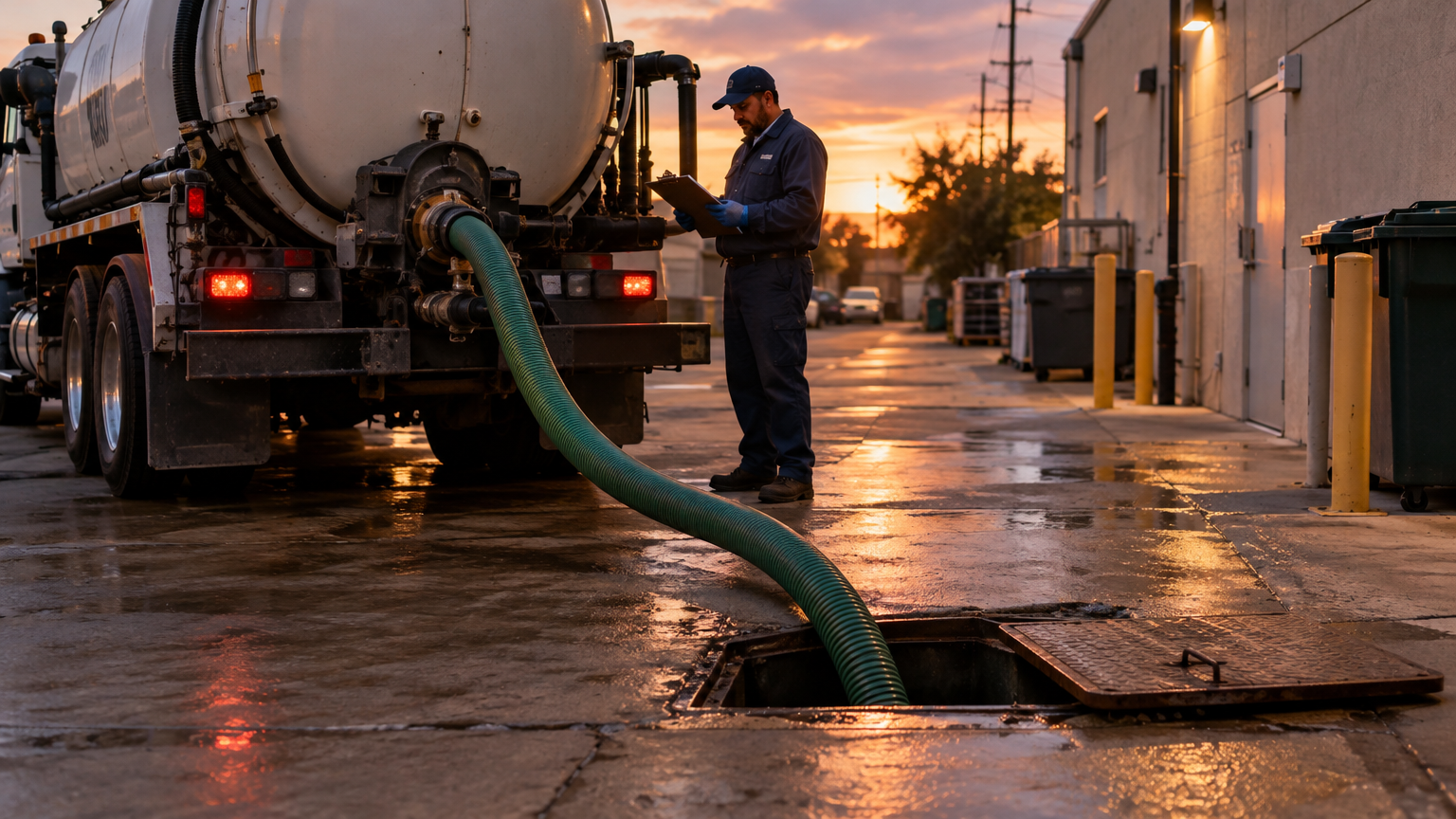
TL;DR: Your adopted local ordinance governs the trap on site. TCEQ's sludge rules at 30 TAC 312 govern who can haul the waste and where it goes. Every load needs a trip ticket. ComplyFlo helps haulers capture and retrieve trip-ticket records.
Who regulates grease traps in Texas?
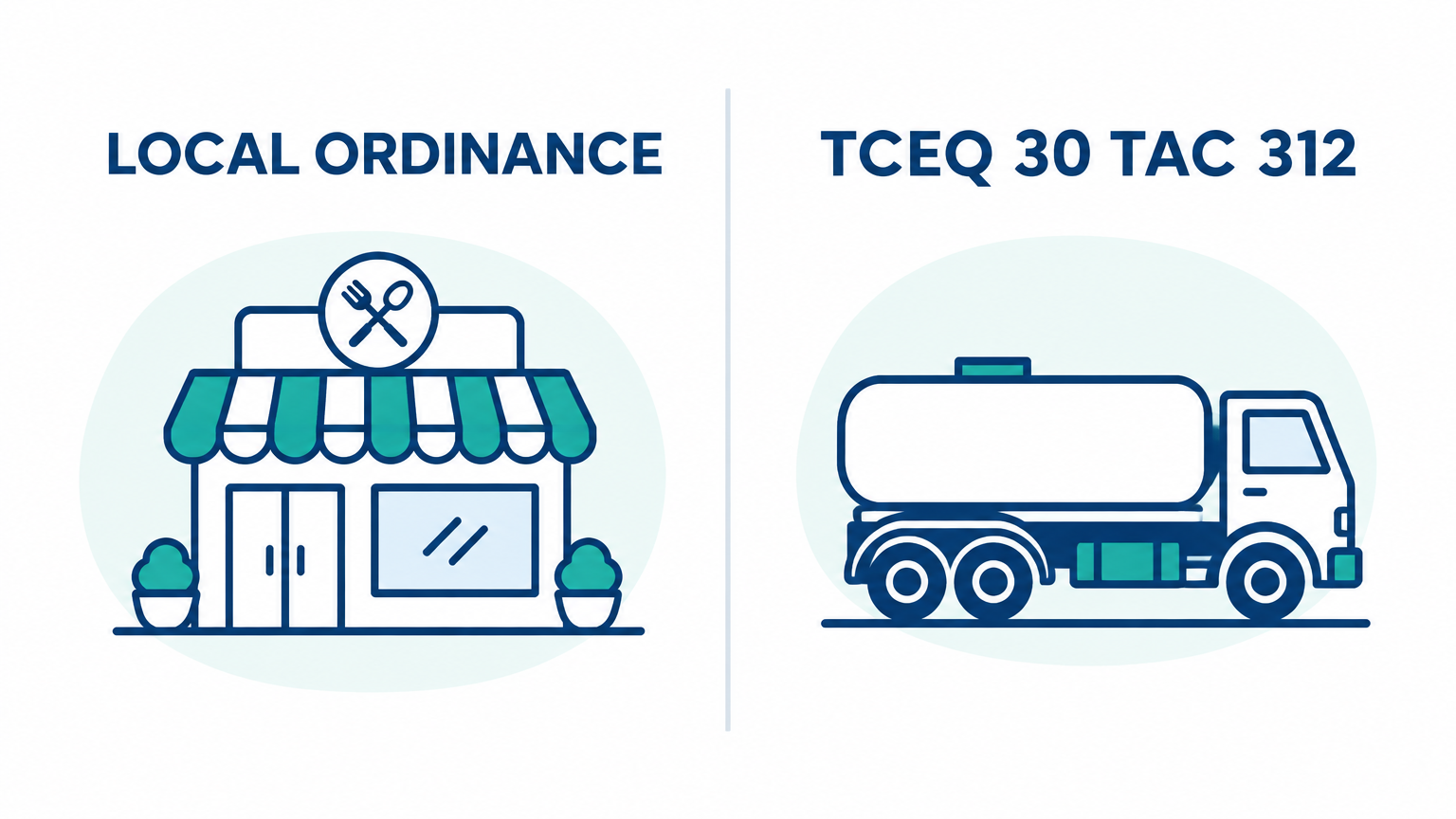
Two layers regulate grease traps in Texas, each covering a different part of the job.
Your local layer is the grease ordinance of your sewer authority, the publicly owned treatment works (POTW). It governs the trap on site.
The state layer is TCEQ's sludge transportation rules at 30 TAC 312, which govern who may haul the waste and where it goes.
TCEQ's model standards are a template for cities, not a statewide rule. Your adopted ordinance controls.
Are food service businesses required to have a grease trap in Texas?
Whether you must install a grease trap or interceptor depends on your sewer authority's adopted requirements and other applicable codes. TCEQ's model ordinance requires covered food-service facilities to install, use, and maintain grease-control equipment, but the model itself is not a statewide installation rule. Confirm applicability, sizing, exemptions, and approvals with your sewer authority.
The model covers restaurants, food processors, hospitals, hotels, prisons, nursing homes, and any food service facility (TCEQ model standards).
Under the model, residential users are not required to have one.
Under the model, new and expanded facilities install the trap before a certificate of occupancy (TCEQ model standards).
How often must a Texas grease trap be cleaned?
Your adopted ordinance sets the schedule. The model standards give the baseline a city may adopt.
The model calls for earlier pumping when floating materials, sediment, oils, or greases occupy 25 percent or more of the device's wetted height, measured from the bottom to the outlet-pipe invert (TCEQ model standards).
Under the model, complete evacuation is required at least every 90 days unless the POTW grants a written exception, and even then full evacuation, cleaning, and inspection is required at least every 180 days (TCEQ model standards).
What does a Texas grease trap hauler have to hold?
A hauler must hold a TCEQ sludge transporter registration before beginning regulated transportation operations, which covers grease trap, grit trap, and septage waste (30 TAC §312.142(a)).
Register with TCEQ using Form TCEQ-00481 (TCEQ).
The vehicle sticker fee is $10 per vehicle. That charge is separate from TCEQ's annual hauling fee, currently $100-$500 based on the amount hauled during the reporting period (TCEQ).
Registration expires August 31, renews biennially, and the renewal is due by June 15 of the expiring year (30 TAC §312.142(d)).
Keep the annotated registration in each vehicle and show it at delivery (30 TAC §312.142(c)).
What must a Texas grease trap trip ticket include?
For covered loads, §312.145 sets the required trip-ticket fields, signatures, distribution, and retention. This is a summary.
Transporter name, address, phone, and commission registration number.
Generator name, signature, address, phone, and collection date.
Type and amount of waste.
Name and signature of each person collecting, transporting, and depositing the waste.
Date and place of deposit.
Receiving facility's permit or registration number, location, and operator.
Receiving representative's signature and the amount of waste received.
Volume of the grease and grit trap or the septic tank.
The model standards include a consecutive tracking number; check your adopted local requirements, since it is not one of the eight §312.145(a) fields. The transporter gives the generator a copy at pickup and returns a completed copy within 15 days after the receiving facility accepts the waste; copies are kept five years and available for TCEQ review (§312.145(b)). See our guide to grease trap manifest requirements in Texas for the full list.
Can grease trap waste be mixed or sent anywhere?
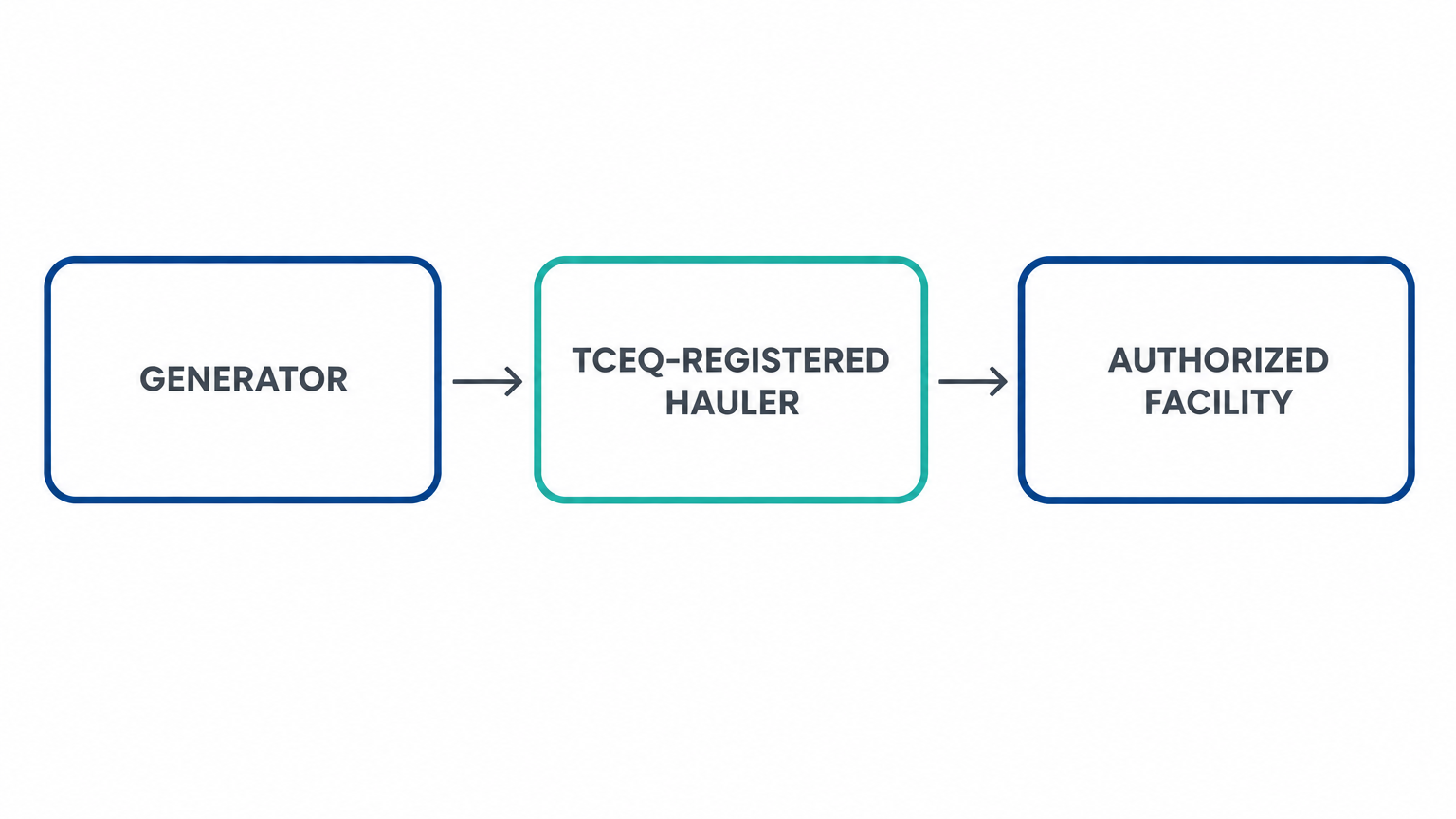
Grease-trap waste must go to a facility authorized to receive it. Mixing is subject to the compatibility and receiving-facility authorization requirements in §312.144(c).
Authorized destinations hold written authorization by permit or registration to receive that waste, such as treatment plants permitted to accept hauled waste, licensed landfills accepting sludge, and processing or rendering facilities (§312.143(a)).
§312.144(c) prohibits mixing incompatible wastes and requires containers and pumping equipment to be emptied and cleaned before handling incompatible wastes. The rule allows wastes with different characteristics to be mixed when the receiving facility is authorized to manage that specific mixture. Do not combine grease-trap waste and septage without confirming the receiving facility's authorization and applicable acceptance requirements; accurately identify the waste types and amounts on the trip ticket.
The model also bars surfactants, solvents, and emulsifiers in a trap, because they let grease pass into the sewer.
How does a manual grease-trap process compare with ComplyFlo?
Paper records are slow to retrieve at inspection. ComplyFlo lets drivers photograph the trip ticket and store it in a searchable workflow.
Grease trap record step | Manual process | With ComplyFlo |
|---|---|---|
Capture the trip ticket | Paper form filled in the field | Driver photographs it; fields extracted |
Check it is complete | Noticed later at the office | Missing fields flagged for review |
Store the record | Filing cabinet or glovebox | Stored in a searchable workflow |
Retrieve it for an inspection | Manual file search | Found by load, generator, or date |
Frequently Asked Questions
Is grease trap waste a hazardous waste in Texas?
Ordinary food-service grease-trap waste is generally managed through Texas's nonhazardous sludge-transportation framework at 30 TAC 312. Do not assume that covers waste contaminated with solvents, chemicals, or other unusual materials. Confirm classification and receiving-facility acceptance when contamination is suspected.
Can a restaurant pump its own grease trap?
Whether a restaurant may self-clean depends on its adopted local requirements. TCEQ's model standards allow an approved self-cleaning program for qualifying small indoor traps of no more than 50 gallons, but that model provision is not automatically the rule in every jurisdiction. Confirm the applicable approval, size, handling, disposal, and recordkeeping requirements with your sewer authority.
How long must Texas grease trap records be kept?
For waste transported under Chapter 312, §312.145 requires trip-ticket copies to be kept five years and available for TCEQ review. Local ordinances may add requirements.
How can a restaurant verify its hauler's registration?
Its record of proper disposal depends on using a registered transporter. Check registration with TCEQ's sludge transporter query before hiring. Missing records can create enforcement and contract exposure.
How do you keep grease trap records audit-ready?
Capture the trip ticket at the pump-out, review it, and store it where you can find it later.
Start with the free printable Texas Grease Trap Manifest Checklist for haulers, then book a demo to see the hauler workflow on your routes.
ComplyFlo reduces human error in data organization and formatting. Haulers and their drivers retain responsibility for data accuracy and all submissions to environmental agencies.
Free checklist
Texas Grease Trap Manifest Checklist
Check transporter registration, manifest fields, authorized disposal, record distribution, and jurisdiction-specific retention requirements.
Ready to replace paper hauler manifests?
Book a free 1-hour demo with a ComplyFlo team member and see it running on your own workflow.
Book a free demoGet TCEQ compliance updates
Deadline reminders, rule changes, and practical guides for Texas waste operators. No spam — unsubscribe anytime.
By subscribing you agree to receive emails from ComplyFlo. See our privacy policy.